Planning a Pool Enclosure in Connecticut: What to Sort Out Before Posts Go In
A pool enclosure has more moving parts than a regular fence, so it pays to plan the details early.
September 23, 2026 · 4 min read
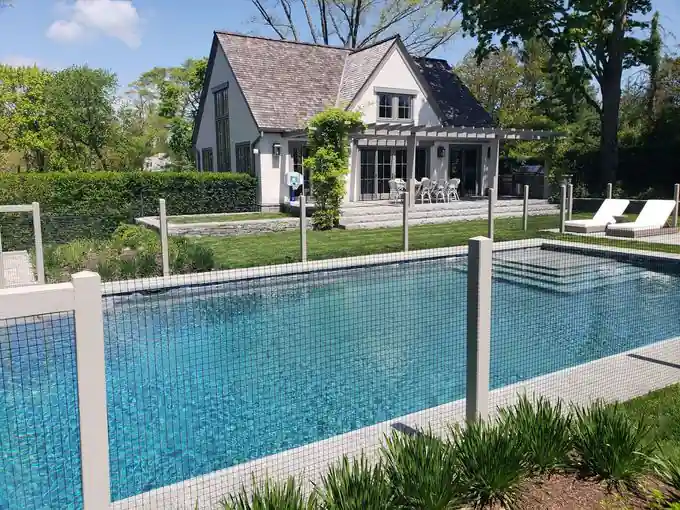
A pool enclosure isn't just a fence around a pool. It has to do a specific job, keeping the pool area secured while still looking like it belongs on your property, and it usually involves more decisions up front than a standard yard fence does. If you're planning one for a home in Connecticut, here's what's worth sorting out before any posts go in the ground.
Start With Your Town's Building Department
Every town in Connecticut sets its own requirements for what a pool enclosure has to do, and those requirements can differ from one town to the next even within Fairfield County. We don't try to guess at what a particular town wants or work around it. We build strictly to the pool code your town's building department applies, and we'd rather have that conversation early than find out partway through a job that something needs to change. Scott Ryan described it this way after working with us: "they help us with the permitting process, their quote was fair, they were on time and on budget." Getting the permitting sorted early is part of the job, not an afterthought tacked onto the end of it.
Gate Direction Matters More Than It Seems
Which way a pool gate swings, and where it sits along the enclosure, affects both how the space gets used every day and how the gate performs over time. A gate that opens into a tight corner gets bumped, dragged, and eventually knocked out of alignment. Self-closing, self-latching hardware is standard on a pool gate for good reason, it does its job quietly in the background as long as the gate itself is hung right and the latch is positioned where it should be. Getting the swing direction and hardware placement right the first time saves a callback later.
Picking a Material for an Enclosure
We build pool enclosures in wood, vinyl, chain link, aluminum, iron, and cedar post and rail, and which one makes sense depends on your yard as much as your taste. Aluminum holds up well around chlorinated water and needs very little upkeep, which is why it's a common choice for enclosures specifically. Wood and cedar bring warmth and blend into a landscaped yard, but they ask more of you in terms of maintenance near a pool deck. Vinyl sits in between, low upkeep with a cleaner look than chain link. None of these is a wrong answer. It comes down to how the enclosure needs to sit next to your house and the rest of your property.
Tying the Enclosure Into the Rest of the Yard
A pool enclosure that looks bolted onto the yard after the fact stands out in the wrong way. We try to match the enclosure to whatever else is going on around it, an existing fence line, the house's trim color, a stone wall or planting bed nearby, so the finished pool area reads as part of the property rather than a separate structure sitting in the middle of it.
Living With an Enclosure Day to Day
Once the enclosure is up, using it well is mostly a matter of habit. Latch the gate every time, even for a five minute pool check, and everyone in the house adjusts to it fast. We build with hardware that's meant to hold up to that daily use, not just look right on installation day, because an enclosure only does its job if the gate closes the same way in July as it did the day we finished the project. If you notice a latch starting to stick or a gate dragging, it's worth having it looked at before it becomes something you work around instead of something that works.
What to Have Ready Before You Call
- A rough idea of where the pool equipment sits, since the enclosure often needs to route around it
- Any existing fence or wall you want the new enclosure to connect to or match
- Whether your property has an HOA with its own separate rules to check alongside the town's
- A sense of how you use the gate day to day, which helps us plan where it should swing
A pool enclosure done right disappears into the background of a normal pool day. You stop thinking about it because it's just working, the gate closes on its own, the latch holds, and the whole thing looks like it was always meant to be there. If you're starting to plan one, call us at (203) 972-0280 or send us a message through our contact page and we'll talk through what your town requires and what fits your yard.
Gannon Rustic Fence LLC, (203) 972-0280
Call (203) 972-0280More articles
Building a Fence on a Slope or Over Ledge in Fairfield County
A good looking fence on sloped ground starts with the grade, not the panel.
Cedar, Vinyl, Aluminum, Iron or Chain Link: Choosing a Fence Material for a New Canaan Yard
The right material depends less on trend and more on what your yard actually needs to do.