Deer Fence Around a Garden: What Works in Fairfield County
Deer fencing is its own category, and a few details make the real difference.
September 23, 2026 · 3 min read
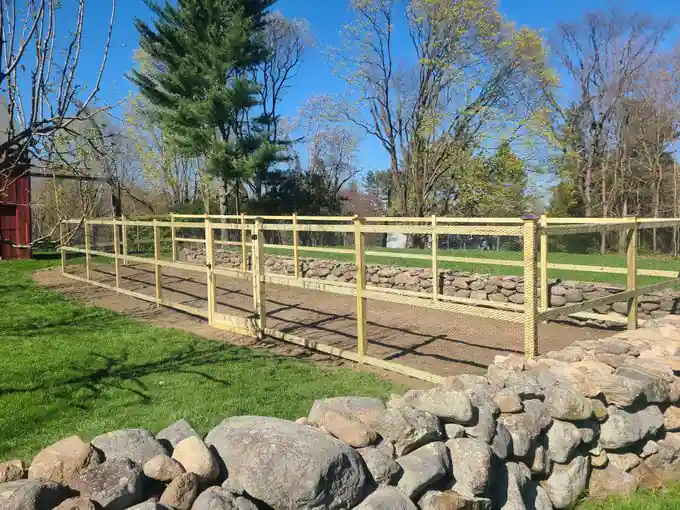
Deer pressure is one of the most common reasons we get called out to a property that already has some kind of fence in place. A short decorative fence around a garden bed might look nice, but it won't slow deer down at all. A fence built specifically to keep deer out is its own category, and it comes down to a handful of details that make the real difference.
Height Is the First Thing That Matters
Deer are strong jumpers, and a fence that's tall enough to discourage them needs real height, not just a token barrier. We build deer fencing as one of our standard products specifically because a garden fence at a normal yard-fence height simply doesn't do the job. Getting the height right from the start saves you from watching deer clear a fence that looked plenty tall on paper.
Wire and Posts, Not Just a Wall
Most effective deer fencing pairs sturdy posts with a wire mesh field rather than solid panels, which keeps the structure light enough to be practical around a large garden area while still being tall and continuous enough to stop deer from getting through or over it. The posts do the structural work, spaced to hold the wire taut along the whole run, and the wire itself needs to stay tight, a loose or sagging section is the weak point deer will eventually find.
Working Along a Stone Wall
A lot of Fairfield County properties already have fieldstone walls running along part of the yard, and a deer fence often gets built right along that line rather than cutting across the property on its own path. Tying new posts into an existing stone wall keeps the fence from looking like it was dropped onto the landscape, and it uses a boundary that's often already doing part of the job. It does mean the same rock and ledge considerations that come up with any fence in this area apply here too, since stone walls and ledge tend to show up together.
Timing the Installation
Late fall through early spring tends to be a good window for deer fencing, since the ground is easier to work before a garden is actively growing and the fence is in place before the next season's plantings go in. That said, deer pressure doesn't wait for a convenient time of year, and if they've already found your garden, it's worth getting a fence up whenever the problem shows up rather than waiting for an ideal season. We can generally schedule a consultation quickly and work around what your yard actually needs.
Deer are persistent about testing a new fence for the first few weeks after it goes in, checking corners, gates, and any spot where the wire might have gone up loose. A fence that holds through that early testing period tends to keep working for years, which is part of why getting the details right at installation matters more than it might seem for what looks like a simple wire enclosure.
Gates Have to Work Like Gates
A deer fence is only as good as its weakest gate. If a gate gets left open, propped, or doesn't latch reliably, the rest of the fence doesn't matter. We build gates into deer enclosures that are sized for how you'll actually use them, wide enough for a wheelbarrow or a mower if that's what the garden needs, with hardware that holds up to regular use rather than just the initial installation.
- Where deer are already getting in, if you've noticed a pattern
- Whether the fence needs to enclose the whole property or just a garden or planting area
- Any existing stone walls or fence lines the new fence should tie into
- How wide the gate needs to be for equipment, not just foot traffic
Getting the Details Right the First Time
Kolleen Johnsen told us about her experience: "They removed our old fence and effectively placed the fence on our property that has a slight grade. The end product looks fantastic!" Getting a fence to sit right on real ground, not flat theoretical ground, is the same skill whether the goal is privacy or keeping deer out of a vegetable garden.
If deer have been getting into your garden or landscaping, we're happy to walk the property and talk through what height and layout actually make sense for it. Call us at (203) 972-0280 or get in touch through our contact page.
Gannon Rustic Fence LLC, (203) 972-0280
Call (203) 972-0280More articles
Building a Fence on a Slope or Over Ledge in Fairfield County
A good looking fence on sloped ground starts with the grade, not the panel.
Planning a Pool Enclosure in Connecticut: What to Sort Out Before Posts Go In
A pool enclosure has more moving parts than a regular fence, so it pays to plan the details early.